In the mid-afternoon I am walking back and forth in my apartment building hallway, trying to rack up steps toward my daily goal of 1,000. In the 10 days since the war with Iran intensified, I am afraid to go outside the building, even on such a warm, sunny day. I might have to make a serious run for safety if a critical alert comes when I am out there. My mind still thinks I could get to safety within the 90 seconds allowed by Home Front Command, but my 80-year-old body has determined otherwise.
So I am walking the hallway, back and forth, using my trekking poles as if I were hiking on a lovely trail, rather than on shabby carpet in a building that has seen better days. There are some permanent residents living in this apartment/hotel, but also short-term renters, so I often encounter unfamiliar faces. Because I try to take every opportunity to use Hebrew and to integrate myself into the social landscape, I always say “Shalom.”
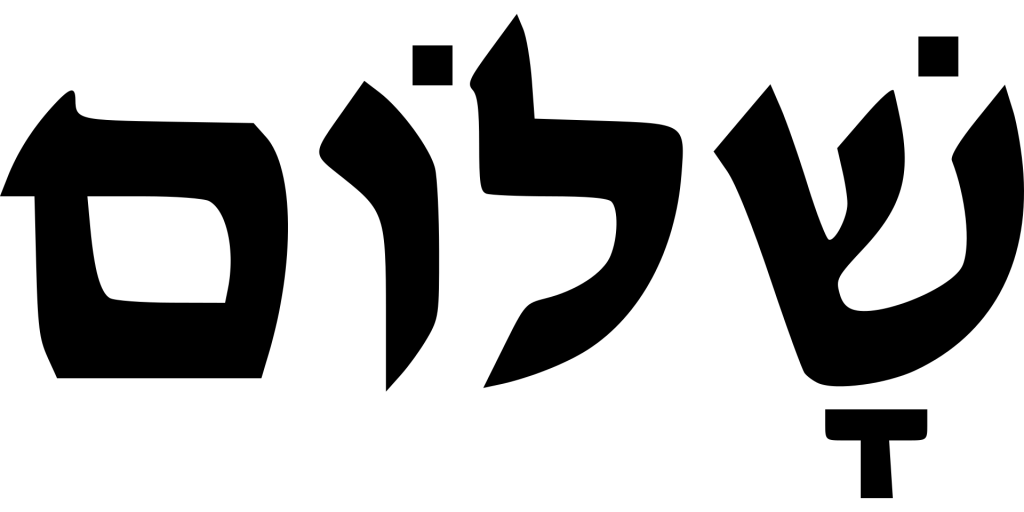
This afternoon I encounter an unfamiliar gentleman who is getting into our 3rd floor elevator. I say “Shalom” and he responds “Shalom, shalom.” I haven’t heard that double response before, and it starts me thinking about this Hebrew greeting, usually translated as hello.
It does serve as hello (and also goodbye), but it has much deeper meaning. Shalom literally means “peace.” Hebrew words often contain related concepts, so peace also invokes “wholeness,” “completeness” and a sense of how things “should be.” After getting that double hello (or was he saying goodbye?) I started to think about how beautiful it is to express hello and goodbye through invoking peace and completeness.
Later that same night, around 1 AM, the critical alarm went off, blaring us out of a deep sleep, followed quickly by sirens indicating that we needed to go immediately to the safe room down the hall. As we entered that space, we did so with several people we now know as neighbors, since we had shared this space with them many times during the previous week. One of them said “Shalom” and we returned the greeting.
Sitting there in the sober silence of the safe room, I thought back to my afternoon delight in the use of Shalom, such a divine concept, as an everyday greeting. But what does this greeting invoke when we are entering a safe room because missiles might strike the building in which we live, certainly destroying our home, and possibly ending our lives?
Is this Israeli culture, one that I am in the process of adapting to and adopting as my own, a culture that blindly ignores the fact that peace of any kind so often seems to be non-existent and possibly not even attainable?
From my experience so far, I would have to answer no. Israelis of all shades & identities live with the daily reality that things are not as they should be. A person cannot survive emotionally here for long without accepting that reality. But also from my experience so far, most Israelis also understand that we cannot survive spiritually if we cease to hope. And sometimes hope is all we have.
When we get the all clear message just before 1:30 AM, we file out of the room, walking wearily back to our beds, hoping for at least a few hours of uninterrupted sleep. One of our neighbors says “Shalom.” With no hesitation I say “Shalom” and really mean it. In this chaotic brokenness and deadly reality, there are still shards of peace and wholeness. That may be all we have right now, but maybe, just maybe, it will be enough.
 Wrestling with Angels
Beautiful. And true.
LikeLike